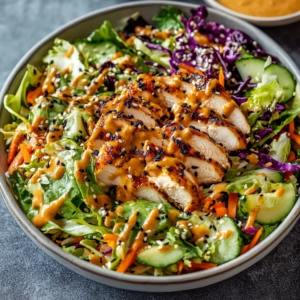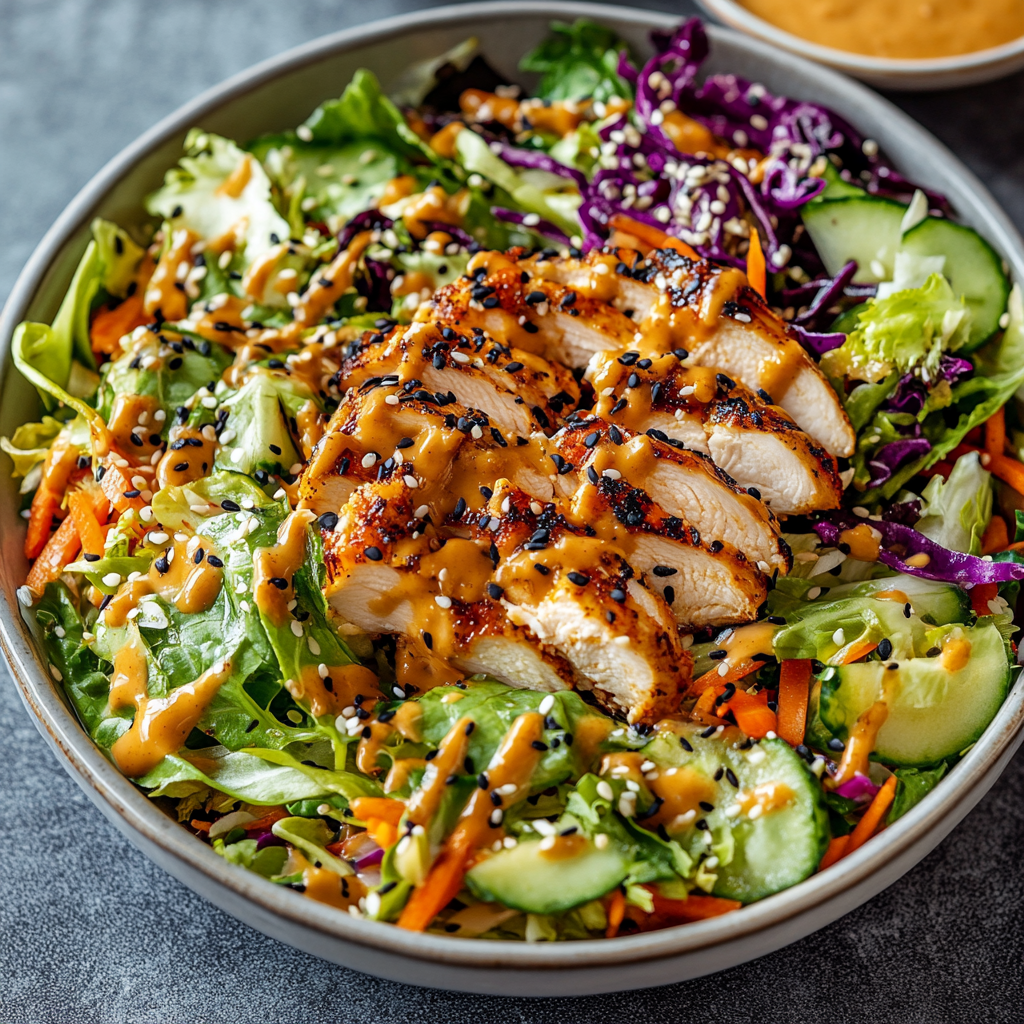
Asian Sesame Chicken Salad is the perfect harmony of crisp vegetables, tender chicken, and a rich sesame-ginger dressing that awakens your taste buds. Whether you’re seeking a light lunch, a vibrant dinner, or a side for your summer picnic, this dish brings a touch of Asian-inspired brightness to every bite. With just 25 minutes of effort and ingredients you likely already have in your fridge, you can transform tossed salad into a symphony of texture and flavor that feels both indulgent and nourishing. The bold sesame notes and subtle garlic-ginger undertones dance with the crunch of cabbage and carrots, making each forkful feel like a celebration of fresh, wholesome living.
What makes this salad especially special is its versatility—it adapts to your preferences while staying rooted in simplicity. Add a sprinkle of toasted sesame seeds for extra nuttiness, or swap edamame with shelled peas for a different crunch. The recipe doubles as a base for creativity, inviting you to play with colors, textures, and flavors while maintaining its core of clean, balanced nutrition. Let’s dive into what makes this dish a modern kitchen essential.
What is Asian Sesame Chicken Salad?
Asian Sesame Chicken Salad is a modern fusion dish that blends classic Asian flavors with the adaptability of a healthy tossed salad. At its heart lies a medley of raw cabbage, carrots, and edamame, which provide both color and a satisfying crispness. The star of the dish is the sesame-ginger vinaigrette—a creamy, slightly sweet, and deeply savory dressing that transforms ordinary greens into something extraordinary. This salad draws inspiration from seasonally fresh bento boxes and Japanese kaiseki dishes that celebrate simplicity and balance, refined for easy home preparation.
The origins of this dish lie in the complementary philosophy of Asian cuisine, where contrasting flavors and textures create harmony on the plate. Cabbage and carrots offer crunch, edamame provides protein and greens, while the grilled chicken adds heartiness. The dressing, a fusion of rice vinegar, soy sauce, and sesame oil, brings the elements together with its signature umami depth. Whether served warm as a light entrée or cold as a refreshing side, this salad embodies the essence of mindful eating—nourishing both the body and the soul.
Reasons to Try Asian Sesame Chicken Salad
There are three compelling reasons to make this salad a staple in your weekly meal rotation. First, the flavors are anything but ordinary. The sesame vinaigrette adds an air of sophistication that elevates a simple salad into a weekend-brunch-worthy dish. Second, this recipe is incredibly adaptable for different dietary needs. The base is naturally high in protein and fiber, while you can customize it to be gluten-free by using tamari instead of soy sauce or vegan by omitting the chicken and using tofu instead. Finally, it’s an ideal solution for busy days—most of the prep can be done in advance, and the ingredients stay fresh for up to three days when stored properly.
This salad is especially suited for those who crave satisfying meals without the hassle of complicated cooking. It’s perfect for families looking for nutritious yet flavorful options, for health-conscious individuals seeking balanced meals, or for anyone who enjoys experimenting with new flavors. The moderate cooking time (mostly just grilling chicken) means you can set it on the stove while prepping the vegetables and dressing. The result? A vibrant dish that feels thoughtful but requires minimal effort, proving that wholesome food doesn’t have to be complex to be memorable.
Ingredients Needed to Make Asian Sesame Chicken Salad
2 cups shredded green cabbage
1 cup shredded red cabbage
1 cup shredded carrots
1 cup shelled edamame (steamed)
2 grilled chicken breasts, sliced or shredded
2 green onions, sliced
Optional toppings: 1 tablespoon sesame seeds, 1/4 cup sliced almonds, 2 tablespoons chopped cilantro
Sesame-Ginger Vinaigrette
3 tablespoons rice vinegar
2 tablespoons soy sauce
1 tablespoon sesame oil
1 tablespoon olive oil
1 tablespoon honey or maple syrup
1 teaspoon grated fresh ginger (about 1 small knob)
1 small garlic clove, minced
Optional: 1 teaspoon lime juice or 1/2 teaspoon sriracha for extra zing
Instructions to Make Asian Sesame Chicken Salad
Step 1: Begin by preparing your vegetables. The timing here is flexible—shred the green and red cabbage, carrots, and steam the edamame about 30 minutes in advance so they stay crunchier when tossed with the dressing. Grilled chicken can be prepped separately. The key is to work sequentially but efficiently, ensuring each component stays at peak freshness.
Step 2: While the vegetables marinate in anticipation, whisk together the vinaigrette. Combine rice vinegar, soy sauce, sesame oil, olive oil, honey, ginger, and garlic in a small bowl. The proportions are designed to balance boldness with subtlety—too much soy sauce can overwhelm the dish, while too little leaves it flat. Taste and adjust as needed for your preferred level of tang and sweetness.
Step 3: In a large mixing bowl, gently combine the cabbages, carrots, and edamame. Use a spatula for even distribution, and avoid squishing the texture. The layers should remain distinct but unified, like pieces of a culinary puzzle. Top with the grilled chicken before adding the vinaigrette so the dressing can better coat the components without making the chicken overly soggy.
Step 4: Drizzle the vinaigrette over the salad and toss gently. Use your hands or tongs to ensure even coverage, cradling the ingredients like tender roots in soil. The blocky cabbage and sliced carrots hold their shape, while the edamame adds a bite of texture. Finally, sprinkle optional toppings like sesame seeds or almonds for added nuttiness and crunch.
Step 5: Serve immediately or chill for 30 minutes to let the flavors meld. This salad is best enjoyed within two hours of tossing, as the moisture content from the cabbage and dressing softens the texture over time. For a warm variation, simply gently pan-warm the salad before serving, but be careful not to overheat the chicken.
Chef’s Tips for a Perfect Result
- Rice vinegar is essential—it adds the tang that cuts through the richness of the sesame oil, preventing the dressing from feeling heavy.
- Toasted sesame seeds (not raw) elevate the dish with their roasted aroma; sprinkle them after tossing the salad for maximum crunch.
- Grill the chicken quickly over medium-high heat to preserve its juiciness. Avoid overcooking beyond white meat, as dried-out chicken diminishes the overall experience.
- If using store-bought rice vinegar, test it for salt content and adjust soy sauce accordingly. Homemade soy sauce (mirin-based) adds a depth no bottled substitute matches.
- For a harvest-inspired twist, add 1/2 cup roasted sweet peppers or pickled daikon as a textural contrast.
Variations and Substitutions
Gluten-Free Option
Substitute soy sauce with tamari. This is particularly important if serving to those with gluten sensitivities or celiac disease. Tamari’s darker, richer profile holds up well without diluting the flavor.
Vegan Adaptation
Replace chicken with 1 cup of pressed and sliced tofu. Cubed water chestnuts or steamed shiitake mushrooms also add delightful texture and umami when dressed similarly.
Low-Carb Alternative
Omit edamame and carrots. Add 1 cup of shredded broccoli or finely chopped kale for color and fiber without the starch content.
Budget Swap
Use store-brand rice vinegar and olive oil. You’ll save 40-50% without sacrificing quality, though fresh ginger is worth splurging on for maximum flavor impact.
Mediterranean Twist
Add 1/2 cup crumbled feta and 1/4 cup chopped parsley. The saltiness pairs beautifully with the umami of the sesame dressing, creating an unexpected but harmonious fusion.
How to Serve and Pair
This salad shines when presented in a white ceramic bowl with flower-print chopsticks to match the vibrant colors of the dish. It pairs beautifully with steamed bok choy, jasmine rice, or soft-serve miso soup for a complete East-meets-East meal. For a heartier experience, serve over a warm bed of soba or brown rice noodles.
When hosting, let each guest build their own salad by arranging components on a large platter. Position shelled edamame in a small bowl, wrap the chicken in a serving spoon, and set out multiple small bowls for the vinaigrette, sesame seeds, and optional toppings like soy curls or mango slices. This interactive style adds a festive touch perfect for brunches or casual gatherings. Leftover vinaigrette can be stored and reused for other grain bowls or coleslaws.
Storage and Reheating
Refrigerator
Store dressing separately from the constructed salad in airtight containers for up to 3 days. When ready to use, toss everything together. The raw vegetables may soften slightly, but the umami depth will intensify. Renovate texture by adding a drizzle of olive oil and a squeeze of lime before serving.
Freezer
Freeze cooked chicken breasts and unused vinaigrette for up to 3 months. Thaw in the fridge overnight, then reheat chicken gently in a skillet to restore juiciness. Avoid freezing raw cabbage mixtures, as they develop an undesirable mushy texture after thawing.
Room Temperature
Assemble the salad up to 2 hours before serving. Keep in a lidded container in a cool place, but consume within this timeframe to maintain freshness. For outdoor events, chill in an insulated cooler.
Reheating
Warm chicken separately in a pan over medium heat with a splash of water to prevent drying. Adding the vinaigrette just before serving reintroduces moisture. Microwaves aren’t ideal for this rich dish, as they tend to concentrate the vinegar and make the cabbage rubbery.
Nutritional Values
Calories: 330
Protein: 28g
Carbohydrates: 18g
Fat: 16g
Fiber: 4g
Approximate values.
Frequently Asked Questions
Q1: Can I use ground chicken instead of grilled chicken breasts?
Absolutely. For 2 cups of ground chicken breast, pan-sear with 1 tablespoon of avocado oil until fully cooked. This works especially well for a one-pot chicken salad. Add 1/4 teaspoon of black pepper before cooking to mirror the depth of flavor from spice in the original dish.
Q2: How do I tell when the vinaigrette is properly balanced?
An emulsified vinaigrette should coat the back of a spoon without forming thick strata. If it separates within 5-10 seconds of stirring, whisk in an additional 1/2 teaspoon of rice vinegar. Toothpick tests—insert through the salad—to confirm that no dressing slides off instantly; ideal coverage sticks to all surfaces.
Q3: My chicken became rubbery. How can I salvage the dish?
Cut the chicken into smaller pieces and flash-fry several times in a skillet over medium heat with 1 tablespoon of soy sauce and 1 teaspoon of mirin. This quick reheating method restores juiciness while adding a touch of char. Alternatively, serve the salad with a chicken-based broth to maximize liquid absorption when dining.
Q4: Can I make this salad in advance?
Prepare the vinaigrette and components 12 hours ahead, but toss just before serving. To maintain crispness, store cabbage separately in an airtight container with some parchment paper to absorb excess moisture. Reconstruct the salad up to 1 hour before guests arrive, then toss gently with the dressing to reinvigorate the flavors without sogginess.
Q5: What’s the best way to customize this for a family of five?
Scale ingredients by doubling the recipe. For a celebration meal, add 1 bell pepper, 1/2 avocado, and substitute edamame with 1 cup shelled edamame (steamed) for protein. Modify the vinaigrette by using 1/2 cup rice vinegar to keep the dressing vibrant amidst the larger volume of greens.
Conclusion
Asian Sesame Chicken Salad is more than just a dish—it’s an experience that invites you to savor every bite. With its blend of hearty cabbage, tender chicken, and the perfect umami of the sesame-ginger dressing, it’s a meal that feels both comforting and exciting. Whether you’re feeding a family, hosting friends for a weekend brunch, or simply enjoying a solo moment of mindfulness with a warm cup of green tea, this salad promises to nourish and delight. Its signature sesame flavor, with notes of toasted spices and a hint of tang, will bring a dash of Asian-inspired creativity to your everyday meals.